
Top 8 Social Media Marketing Strategy for Business Growth in 2026
Introduction
Welcome to the digital landscape of 2026. If your current approach still relies on the “post and pray” methodology of years past, you are essentially trying to navigate a supersonic jet with a paper map. Today, social media isn’t just a marketing channel; it is the entire customer journey. It is the search engine, the storefront, the customer service desk, and the community hub rolled into one.
In this environment, a cohesive Social Media Marketing Strategy is the difference between a brand that thrives and one that fades into digital noise. We are seeing a massive shift where platforms like TikTok, Instagram, and YouTube collectively account for over 60% of product discovery, officially surpassing traditional search engines for younger demographics.
To thrive, businesses must pivot from chasing vanity metrics to engineering frictionless, human-centric experiences. Here is your definitive guide to the top 8 strategies designed to drive explosive business growth in 2026.
1. Master AI-Driven Hyper-Personalization
In 2026, AI is no longer a novelty used to brainstorm quirky captions; it is a foundational strategic partner. A modern Social Media Marketing Strategy is now driven by AI-powered predictive analytics that analyze massive volumes of real-time data to forecast trend lifecycles and content saturation risks.
AI allows brands to move from reactive marketing to proactive hyper-personalization. Instead of guessing what your audience wants, algorithms analyze past interactions, device usage, and intent signals to deliver dynamic creative that speaks directly to micro-segments. For a deeper look at how AI is reshaping the industry, check out the HubSpot 2026 State of Marketing Report which highlights the transition toward automated consumer empathy.
Actionable Tip: Utilize AI tools not just for content creation, but for predictive budget allocation. Let the machine identify the optimal emotional tone for your specific audience.
The Benefit: Higher conversion rates and lower ad spend through surgical precision.
2. Optimize for Social Search (The New SEO)
The way consumers look for information has fundamentally changed. Today, nearly half of users turn to social media networks first when searching for information online, bypassing traditional AI chatbots and search engines. They want user-generated content and real human validation.
Your Social Media Marketing Strategy must treat platforms as robust search engines. This means your content must be optimized for searchability, not just scrollability.
Keyword-Rich Captions: Treat your video captions and post descriptions like meta descriptions.
On-Screen Text and Audio: Algorithms “read” the text on your video and “listen” to your voiceovers. Ensure your target keywords are spoken aloud.
Categorization: Use platform-specific categorizations and location tags to feed the algorithm exactly what your content is about.
3. Capitalize on Social Commerce 2.0: Frictionless Shopping
Social commerce has matured. We are well past the days of “link in bio.” In 2026, the entire purchasing process—from discovery to checkout—happens seamlessly within the social app. This integration is a cornerstone of any effective Social Media Marketing Strategy for retail and B2C brands.
Discovery is impulse-led. A user scrolls through a Reel, sees a product in action, and checks out natively within seconds. Furthermore, conversational commerce has skyrocketed. Platforms like WhatsApp and Instagram DMs are where real conversions happen, powered by automated AI agents. According to the Sprout Social Index 2026, 70% of consumers now expect to complete a purchase without ever leaving their favorite social app.
Video-First Selling: Leverage Live Shopping and shoppable short-form videos. Real-time demonstrations reduce buyer doubt.
Frictionless Checkout: If a user has to leave the app to buy your product, you have already lost them. Ensure your shops are fully integrated.
4. Leverage “Everyday AR” and Immersive Utility
Augmented Reality (AR) has moved beyond gaming gimmicks. In 2026, we are in the era of “Everyday AR”—utility-driven immersive experiences that solve real-world consumer problems. Integrating immersive tech into your Social Media Marketing Strategy can drastically reduce the “uncertainty gap” in online shopping.
Brands are using AR to educate consumers. Think virtual makeup try-ons, 3D furniture placement in your living room, or AR filters that act as interactive product manuals. These experiences generate engagement times up to four times longer than standard mobile video.
Interactive Demos: Build AR features that allow users to “test drive” your product virtually.
Spatial Marketing: Explore spatial social networks where users can attend virtual events or interact with 3D models.
5. Foster Authentic, Community-Led Growth
The era of the polished, hyper-curated brand feed is officially dead. In 2026, users crave raw authenticity. Human-generated content is the number one priority, and brand trust is built through community, not broadcasting. A successful Social Media Marketing Strategy today prioritizes “Boutique Communities” over massive, disengaged follower counts.
Shift your focus from building “followers” to cultivating “members.” This means encouraging User-Generated Content (UGC) and building private, engaged groups on platforms like Discord or dedicated WhatsApp communities.
Employee Advocacy: Show the faces behind your brand. Behind-the-scenes content builds unparalleled credibility.
UGC Campaigns: Encourage customers to post their unboxing experiences. Authentic customer content serves as high-converting social proof.
6. Dominate Short-Form Video (The 30-to-60 Second Sweet Spot)
Short-form video continues to reign supreme, driving significantly more engagement than traditional long-form content. However, the format has evolved. The current algorithmic sweet spot for platforms like TikTok and YouTube Shorts is between 30 and 60 seconds—long enough to deliver real value, but short enough to retain modern attention spans.
Your Social Media Marketing Strategy should focus on storytelling that feels native to the platform. For inspiration on evolving video formats, see Social Media Examiner’s 2026 Video Guide, which breaks down the “Loop Effect” in modern cinematography.
The 2-Second Hook: You have precisely two seconds to stop the scroll. Start with a bold statement or a direct question.
Soundless Optimization: A massive portion of viewers consume content on mute. High-quality closed captions are mandatory.
Raw & Real: Ditch the expensive production crew. Lo-fi videos shot on a smartphone often outperform highly produced commercials.
7. Prioritize Ethical Marketing and Deep Transparency
With increased technological power comes heightened consumer skepticism. In 2026, data privacy and ethical marketing are not just legal requirements; they are brand imperatives. Consumers are acutely aware of how their data is used, and many are uncomfortable with purely AI-generated virtual influencers.
Trust is your most valuable currency. A transparent Social Media Marketing Strategy must operate with honesty regarding sustainability efforts and data usage.
Zero Greenwashing: If you promote a sustainability initiative, back it up with hard data.
Data Honesty: Be transparent about what data you collect. Shift toward “zero-party data”—information the customer intentionally shares with you via polls or quizzes.
8. Treat Fulfillment as a Marketing KPI
This is the most critical shift in 2026. A viral video is useless—and potentially damaging—if your supply chain cannot handle the demand. In the modern era, fulfillment is a core component of your Social Media Marketing Strategy.
Platforms strictly monitor seller performance. Poor fulfillment metrics (late shipments, inaccurate inventory) will result in the platform throttling your content’s reach. Consumer expectations are set by instant-delivery standards; there is zero tolerance for slow shipping.
Synchronized Inventory: Ensure your social commerce inventory is synchronized in real-time with your warehouse.
Fast Badges: Utilize fast fulfillment services to maintain a high Shop Performance Score and keep the algorithm happy.
How to Measure Social Media Success in 2026
With all these technological advancements, measuring success has become more sophisticated. Vanity metrics like “follower count” are obsolete. Today, a robust Social Media Marketing Strategy favors watch time, private shares, and direct business impact.
To truly understand performance, you need to rely on hard mathematical data rather than surface-level metrics.
Key Metrics to Track
| Metric | Why it Matters in 2026 |
| Engagement Rate | Measures the depth of interaction (Saves and Shares). |
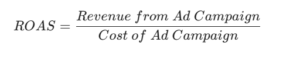
| ROAS | Calculates the direct revenue generated versus ad spend. |
| Dark Social Shares | Measures how often content is shared via private DMs. |
| Retention Rate | Tracks how long users stay on your video content. |
Note: Engagement is no longer just a “Like.” It is the act of a user saving your content for later or sending it to a friend, signaling high value to the algorithm.
To calculate your engagement depth, use this formula:

For your paid campaigns, your Social Media Marketing Strategy should always keep an eye on Return on Ad Spend:
Conclusion
Succeeding with a Social Media Marketing Strategy in 2026 requires a delicate balance. You must leverage highly advanced, AI-driven tools to personalize experiences while simultaneously increasing your brand’s raw human authenticity.
The brands that will experience exponential growth this year are those that treat social media not as an advertising billboard, but as an interactive ecosystem. By optimizing for social search, mastering the 60-second video format, and ensuring your logistics can back up your viral moments, you will build a resilient, high-converting social engine. Adapt to these eight strategies, remain ruthlessly transparent, and watch your business scale.